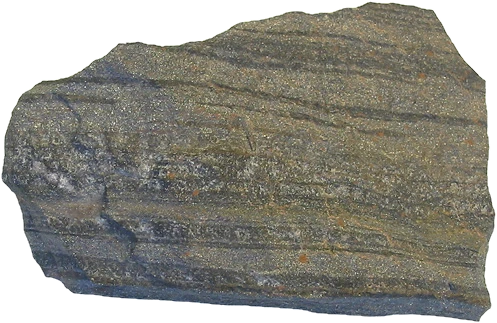
Spodumene
A pyroxene mineral and major source of lithium.

Spodumene is a pyroxene mineral consisting of lithium aluminium inosilicate, LiAl(SiO3)2, and is a commercially important source of lithium. It occurs as colorless to yellowish, purplish, or lilac kunzite, or alternatively yellowish-green or emerald-green hiddenite, taking the form of prismatic crystals, often of great size. The naturally occurring low-temperature form α-spodumene is in the monoclinic system, and the high-temperature β-spodumene crystallizes in the tetragonal system.
- type locality
- Utö, Södermanland, Sweden
- discoverer
- Jose Bonifacio de Andrada e Silva
- crystal system (α-spodumene)
- monoclinic
- crystal system (β-spodumene)
- tetragonal
- chemical formula
- LiAl(SiO3)2
- name origin
- Greek spodumenos, meaning 'burnt to ashes'
Lore & Background
The name is derived from the Greek spodumenos, meaning 'burnt to ashes', owing to the opaque ash-grey appearance of material refined for use in industry. It occurs in lithium-rich granite pegmatites and aplites, associated with quartz, albite, petalite, eucryptite, lepidolite, and beryl. Transparent material has long been used as a gemstone with varieties kunzite and hiddenite noted for their strong pleochroism. Source localities include the Democratic Republic of Congo, Afghanistan, Australia, Brazil, Madagascar, Pakistan, Québec in Canada, and North Carolina and California in the U.S. Single crystals of 14.3 m (47 ft) in size are reported from the Black Hills of South Dakota, United States. Mount Marion contains the world's second-biggest high-grade lithium mineral resources, with an estimated 71 million tonnes of the mineral spodumene.
Reader's Guide
Spodumene is an important source of lithium, for use in ceramics, mobile phones and batteries (including for automotive applications), medicine, Pyroceram, and as a fluxing agent. Lithium is recovered from spodumene by dissolution in acid, or extraction with other reagents, after roasting to convert it to the more reactive β-spodumene. The advantage of spodumene as a lithium source compared to brine sources is the higher lithium concentration, but at a higher extraction cost. An important economic concentrate of spodumene, known as spodumene concentrate 6 or SC6, is a high-purity lithium ore with around 6% lithium content being produced as a raw material for the subsequent production of lithium-ion batteries for electric vehicles. Extraction of lithium from spodumene is challenging due to the tight binding of lithium in the crystal structure. Traditional refining involves acid leaching, while alternative methods use pyrometallurgical processing to convert α-spodumene to β-spodumene. Tesla has developed a process that mixes sodium chloride with β-spodumene concentrate and water, producing a lithium-rich slurry that can be filtered and purified into lithium hydroxide, with waste products repurposed as construction materials.
Did You Know?
- Single crystals of spodumene up to 14.3 m (47 ft) in size have been reported from the Black Hills of South Dakota.
- The name spodumene comes from the Greek spodumenos, meaning 'burnt to ashes'.
More in Minerals & Ore Deposits 1-24
Elsewhere in the Minerals & Ore Deposits universe
Spotted an error? Know more?
This is a living reference — every entry is fact-audited, and reader corrections feed straight into our audit queue. Suggest an edit · See this site's audit record