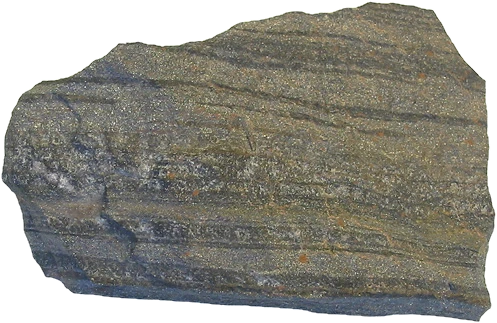
Scheelite
Calcium tungstate mineral, ore of tungsten, named after Carl Wilhelm Scheele.

Scheelite is a calcium tungstate mineral with the chemical formula CaWO4. Well-formed crystals are sought by collectors and are occasionally fashioned into gemstones when suitably free of flaws.
- chemical_formula
- CaWO4
- crystal_system
- Tetragonal
- hardness
- 4.5–5
- specific_gravity
- 5.9–6.1
- color
- Golden yellow, brownish green to dark brown, pinkish to reddish gray, orange, colorless
- fluorescence
- Bright sky-blue under shortwave UV; green with molybdenum impurities
Lore & Background
Owing to its unusual heaviness, it had been given the name tungsten by the Swedes, meaning 'heavy stone.' The name was later used to describe the metal, while the ore itself was given the name scheelerz or scheelite. Scheelite occurs in contact metamorphic skarns; in high-temperature hydrothermal veins and greisen; less commonly in granite pegmatites. Typical mineral association includes cassiterite, wolframite, topaz, fluorite, apatite, tourmaline, quartz, grossular–andradite, diopside, vesuvianite and tremolite.
Reader's Guide
Scheelite has been synthesized using the Czochralski process; the material produced may be used to imitate diamond, as a scintillator, or as a solid-state lasing medium. It was also used in radium paint in the same fashion as was zinc sulphide, and Thomas Edison invented a fluoroscope with a calcium tungstate-coated screen, making images six times brighter than those with barium platinocyanide. Scheelite is widely used in phosphors, particularly in scintillators for X-ray and gamma-ray detection. The second and third iterations of the Cryogenic Rare Event Search with Superconducting Thermometers dark matter detector experiment use calcium tungstate as a scintillator. It is also utilized in fluorescent lighting systems and in some cathode-ray tubes as a phosphorescent screen material. Synthetic scheelite is occasionally offered as natural scheelite, and collectors may be fooled into paying high prices for it; gemologists distinguish natural from synthetic mainly by microscopic examination and absorption spectrum.
Did You Know?
- Scheelite fluoresces bright sky-blue under shortwave ultraviolet light.
- Thomas Edison invented a fluoroscope with a calcium tungstate-coated screen that made images six times brighter than those with barium platinocyanide.
- The semi-precious stone marketed as 'blue scheelite' is actually a rock type consisting mostly of calcite and dolomite, with occasional traces of yellow-orange scheelite.
- Scheelite was originally called 'tungsten' by the Swedes, meaning 'heavy stone,' before the name was transferred to the metal.
Frequently Asked Questions
Who is Scheelite named after?
The mineral takes its name from Carl Wilhelm Scheele, the Swedish chemist who made significant contributions to early mineralogy and chemistry in the 18th century.
What is Scheelite's chemical makeup?
Scheelite is calcium tungstate, with the formula CaWO₄, and it crystallizes in the tetragonal system.
What does Scheelite look like and how does it fluoresce?
Scheelite occurs in a wide palette—golden yellow, brownish green, dark brown, pinkish to reddish gray, orange, or even colorless. Under shortwave UV light it glows a striking sky-blue, though specimens carrying molybdenum impurities shift to a green fluorescence instead.
What is Scheelite's role in industry and collecting?
As the primary ore of tungsten, Scheelite is a key source of that dense, high-melting-point metal used in alloys and tooling. Well-formed, inclusion-free crystals are also prized by mineral collectors and occasionally cut into gemstones.
How hard and dense is Scheelite compared to other minerals?
Scheelite sits at 4.5–5 on the Mohs hardness scale, making it softer than quartz but harder than apatite. Its specific gravity of 5.9–6.1 gives it a noticeably heavy, dense feel for its size.
More in Minerals & Ore Deposits 1-24
Elsewhere in the Minerals & Ore Deposits universe
Spotted an error? Know more?
This is a living reference — every entry is fact-audited, and reader corrections feed straight into our audit queue. Suggest an edit · See this site's audit record