Pyrolusite
A black manganese ore used in glassmaking, batteries, and pigments.

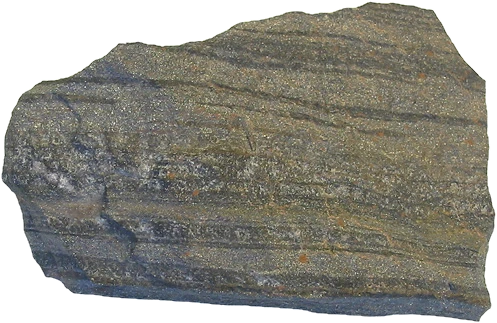
Pyrolusite is a mineral consisting essentially of manganese dioxide (MnO2) and is important as an ore of manganese. It is a black, amorphous appearing mineral, often with a granular, fibrous, or columnar structure, sometimes forming reniform crusts. It has a metallic luster, a black or bluish-black streak, and readily soils the fingers. The specific gravity is about 4.8. Its name is from the Greek for fire and to wash, in reference to its use as a way to remove tints from glass.
- composition
- Manganese dioxide (MnO2)
- specific_gravity
- About 4.8
- luster
- Metallic
- streak
- Black or bluish-black
- common_associates
- Manganite, hollandite, hausmannite, braunite, cryptomelane, chalcophanite, goethite, hematite
- primary_use
- Ore of manganese; manufacture of spiegeleisen, ferromanganese, and alloys; decolorizing glass; preparation of chlorine and disinfectants
Lore & Background
Pyrolusite occurs associated with manganite, hollandite, hausmannite, braunite, cryptomelane, chalcophanite, goethite, and hematite under oxidizing conditions in hydrothermal deposits. It also occurs in bogs and often results from alteration of manganite. It can also occur alongside rhodonite, which is generally pink. The metal is obtained by reduction of the oxide with sodium, magnesium, aluminium, or by electrolysis. Pyrolusite is extensively used for the manufacture of spiegeleisen and ferromanganese and of various alloys such as manganese-bronze. Natural pyrolusite has been used in batteries, but high-quality batteries require synthetic products. Pyrolusite is also used to prepare disinfectants (permanganates) and for decolorizing glass. When mixed with molten glass it oxidizes the ferrous iron to ferric iron, and so discharges the green and brown tints. As a coloring material, it is used in calico printing and dyeing; for imparting violet, amber, and black colors to glass, pottery, and bricks; and in the manufacture of green and violet paints.
Reader's Guide
Pyrolusite has been significant as a primary ore of manganese, essential for steelmaking and various alloys. In prehistory, blocks of pyrolusite have been found at Neanderthal sites, possibly used as pigment for cave paintings or powdered and mixed with tinder fungus for lighting fires. Manganese dioxide, in the form of umber, was one of the earliest natural substances used by human ancestors, used as a pigment at least from the Middle Paleolithic. The ancient Greeks called it μάγνης or Μάγνης λίθος, referring to Magnesia, and the term μαγνησία was used for manganese dioxide. In the sixteenth century it was called 'manganesum,' from which the element manganese derived its name. Notably, black dendritic manganese oxides on rock surfaces are often assumed to be pyrolusite, but careful analyses have shown that none of these dendrites are actually pyrolusite—they are other forms of manganese oxide.
Did You Know?
- Blocks of pyrolusite have been found at Neanderthal sites, possibly used as pigment or for fire-making.
- The name pyrolusite comes from Greek for 'fire' and 'to wash,' referring to its use in removing tints from glass.
- Black dendritic manganese oxides on rock surfaces are often mistaken for pyrolusite but are actually other manganese oxides.
Frequently Asked Questions
What is Pyrolusite?
Pyrolusite is a naturally occurring manganese dioxide (MnO₂) mineral and the chief ore of manganese. It typically presents as a black, amorphous-looking material that can take granular, fibrous, or columnar forms, occasionally building up rounded, crust-like deposits.
How do you identify Pyrolusite in the hand?
Look for a metallic luster paired with a black to bluish-black streak and a specific gravity near 4.8. A telltale field sign is that it readily leaves a dark smudge on your fingers when you rub it.
What is Pyrolusite's main industrial role?
Its greatest value is as the principal ore of manganese, supplying feedstock for spiegeleisen, ferromanganese, and a range of metal alloys. It is also essential for decolorizing glass, preparing chlorine, and making disinfectants.
Why is it called Pyrolusite?
The name combines two Greek roots meaning "fire" and "to wash," a reference to its long-standing use in stripping unwanted color tints from molten glass during the high-temperature firing stage.
Which minerals is Pyrolusite commonly found alongside?
It frequently occurs in the company of other manganese-bearing species such as manganite, hollandite, hausmannite, braunite, and cryptomelane. Iron oxides like goethite and hematite are also typical companions in its ore deposits.
More in Minerals & Ore Deposits 1-24
Elsewhere in the Minerals & Ore Deposits universe
Spotted an error? Know more?
This is a living reference — every entry is fact-audited, and reader corrections feed straight into our audit queue. Suggest an edit · See this site's audit record