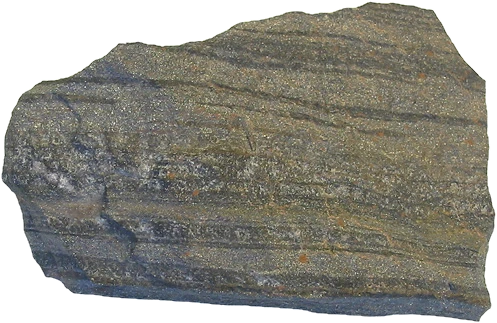
Sulfide mineral
Class of minerals with sulfide or disulfide as major anion.

Sulfide minerals are a class of minerals containing sulfide (S2−) or disulfide (S2−2) as the major anion. Some sulfide minerals are economically important as metal ores. The sulfide class also includes the selenides, the tellurides, the arsenides, the antimonides, the bismuthinides, the sulfarsenides and the sulfosalts. Sulfide minerals are inorganic compounds.
- class
- Sulfide minerals
- major_anion
- Sulfide (S2−) or disulfide (S2−2)
- includes
- Selenides, tellurides, arsenides, antimonides, bismuthinides, sulfarsenides, sulfosalts
- economic_importance
- Some are economically important as metal ores
- classification_system
- Nickel–Strunz Classification -02- Sulfides
Lore & Background
The sulfide minerals are a class of minerals containing sulfide (S2−) or disulfide (S2−2) as the major anion. Some sulfide minerals are economically important as metal ores. The sulfide class also includes the selenides, the tellurides, the arsenides, the antimonides, the bismuthinides, the sulfarsenides and the sulfosalts. Sulfide minerals are inorganic compounds. Common or important examples include Acanthite (Ag2S), Chalcocite (Cu2S), Bornite (Cu5FeS4), Galena (PbS), Sphalerite (ZnS), Chalcopyrite (CuFeS2), Pyrrhotite (Fe1–xS), Millerite (NiS), Pentlandite ((Fe,Ni)9S8), Covellite (CuS), Cinnabar (HgS), Realgar (AsS), Orpiment (As2S3), Stibnite (Sb2S3), Pyrite (FeS2), Marcasite (FeS2), and Molybdenite (MoS2). Sulfarsenides include Cobaltite ((Co,Fe)AsS), Arsenopyrite (FeAsS), and Gersdorffite (NiAsS). Sulfosalts include Pyrargyrite (Ag3SbS3), Proustite (Ag3AsS3), Tetrahedrite (Cu12Sb4S13), Tennantite (Cu12As4S13), Enargite (Cu3AsS4), Bournonite (PbCuSbS3), Jamesonite (Pb4FeSb6S14), and Cylindrite (Pb3Sn4FeSb2S14). The Nickel–Strunz classification scheme is used, with code scheme NN.XY.##x. The class is numbered 02 in the Nickel–Strunz system, and includes divisions such as 02.A Simple Sulfides, Selenides, etc., 02.B Metal Sulfides with various M:S ratios, 02.C Metal Sulfides with M:S = 1:1, 02.D Metal Sulfides with M:S = 3:4 and 2:3, 02.E Metal Sulfides with M:S ≤ 1:2, and 02.F Sulfides of Arsenic, Alkalies; Sulfides with Halide, Oxide, Hydroxide, H2O.
Reader's Guide
Sulfide minerals constitute a broad class of inorganic compounds defined by the presence of sulfide (S2−) or disulfide (S2−2) as the major anion. Their significance lies in their economic importance as metal ores, providing sources for metals such as silver, copper, lead, zinc, iron, nickel, mercury, arsenic, antimony, and molybdenum. The class also encompasses related compounds including selenides, tellurides, arsenides, antimonides, bismuthinides, sulfarsenides, and sulfosalts, expanding the range of elements and minerals covered. The Nickel–Strunz classification system organizes these minerals into a hierarchical scheme based on chemical composition and structure, with divisions for simple sulfides, metal sulfides of varying metal-to-sulfur ratios, and sulfides incorporating halides, oxides, or water. Common examples such as galena (PbS), sphalerite (ZnS), chalcopyrite (CuFeS2), and pyrite (FeS2) are widely recognized, while rarer species like those containing platinum-group elements or rare-earth elements are also cataloged. The classification includes notes on discredited or questionable minerals, reflecting ongoing refinement by the IMA-CNMNC. Overall, sulfide minerals are fundamental to economic geology and mineralogy, with their study informing ore deposit models and industrial extraction processes.
Did You Know?
- Some sulfide minerals are economically important as metal ores.
- The sulfide class includes selenides, tellurides, arsenides, antimonides, bismuthinides, sulfarsenides, and sulfosalts.
- Common examples include galena (PbS), sphalerite (ZnS), and pyrite (FeS2).
- The Nickel–Strunz classification scheme is used for sulfide minerals, with class number 02.
Magmatic Origins of Sulfide Deposits
Magmatic sulfide deposits represent one of the most dramatic pathways by which valuable metals become concentrated in the Earth's crust. These deposits originate from mantle-derived melts that ascend through the crust, where they interact with surrounding rock and acquire sulfur. This chemical interaction renders the sulfide minerals immiscible within the melt, causing them to separate and precipitate as the magma crystallizes. The resulting deposits fall into two principal groups based on their dominant ore element. The first, the Ni-Cu type, is hosted in komatiites, anorthosite complexes, and flood basalts, and includes the remarkable Sudbury Nickel Basin—the only known ore source linked to an astrobleme, or impact structure. The second group yields Platinum Group Elements from large mafic intrusions and tholeiitic rock. Closely associated with PGE deposits are stratiform chromitites, layered formations created by magmatic injection into host rock, with the Bushveld Complex in South Africa standing as the most celebrated example.
Economic Thresholds and Ore Grade
Not every concentration of sulfide minerals qualifies as an ore. The distinction hinges on economic viability: a mineral deposit only earns the label ore when the value of its contained metals outweighs the cost of extracting and processing them. Ore grade—the concentration of the desired material within the host rock—is the critical metric that determines whether mining is worthwhile. A deposit may contain sulfides, oxides, silicates, or native metals such as copper or gold, but it must exceed background levels sufficiently to justify the industrial effort. A complex ore, containing more than one valuable mineral, adds another layer of economic calculation. An ore deposit, in strict geological terms, is a single occurrence of a particular ore type that meets this economic threshold, setting it apart from a mere mineral resource that lacks the concentration needed for profitable extraction. The Anglo-Saxon root of the word ore, meaning a lump of metal, reflects how ancient this economic judgment is.
Separating Sulfide from Gangue
In nearly every sulfide ore body, the valuable minerals are intimately mixed with worthless or undesirable rock and minerals collectively called gangue. This inseparability is the central engineering challenge of mineral processing, also known as ore dressing. The process unfolds in two principal stages: liberation, which physically frees the sulfide grains from the surrounding gangue matrix, and concentration, which isolates the desired mineral from the liberated material. A suite of techniques accomplishes this separation, including froth flotation, gravity concentration, and electric or magnetic methods, chosen according to the specific mineralogy of the deposit. Once the valuable fraction is extracted, the residual gangue becomes tailings—vast quantities of potentially harmful waste material, produced in especially large volumes from lower-grade deposits. These tailings, while economically useless, can pose genuine threats to human health and surrounding ecosystems, making their management an unavoidable consequence of sulfide mining.
Naming and Classifying the Deposits
The names attached to sulfide ore deposits reveal as much about human history and corporate culture as they do about geology. Most deposits are simply named for their geographic location, but a rich variety of other conventions exist. Some honor the discoverers—the Kambalda nickel shoots, for instance, take their name from the drillers who found them. Others draw on whimsy, historical figures, prominent individuals, or the home city of the owning company. Mythology provides another source, with deposits named after gods and goddesses. Corporate code names also persist in the record: MKD-5 was the in-house designation used by the resource company for what became the Mount Keith nickel sulphide deposit. Beyond naming, these deposits are formally classified according to criteria developed through the discipline of economic geology, or ore genesis, which studies the geological processes that created them. Each deposit represents one distinct occurrence of a particular ore type, and its classification—whether magmatic, metamorphic, porphyry, or hydrothermal—encodes the story of its formation.
Frequently Asked Questions
Who is Sulfide mineral?
Sulfide minerals are a broad inorganic mineral class defined by having sulfide (S²⁻) or disulfide (S₂²⁻) as their principal anion. In the Nickel–Strunz taxonomy they occupy category 02, making them one of the foundational groups in modern mineral classification.
What are Sulfide mineral's powers or role?
Their most visible real-world function is acting as the primary ore source for a wide range of industrially critical metals. Beyond ore-bearing species, the class also covers selenides, tellurides, arsenides, antimonides, bismuthinides, sulfarsenides, and sulfosalts, giving it an unusually wide chemical footprint.
How does Sulfide mineral's story end?
There is no single narrative arc; the sulfide class is a living, still-expanding group of inorganic compounds that mineralogists continue to catalogue. New sulfide species are described whenever geologists identify novel metal–sulfur (or related chalcogen) combinations in the field.
Why is Sulfide mineral important?
A large share of the copper, zinc, lead, and other base metals that underpin modern industry are extracted from sulfide ores. Without this mineral class, the global supply chain for key metals would be severely constrained.
What is Sulfide mineral's extended family or roster?
The class stretches far beyond simple metal-sulfur pairs to include selenides, tellurides, arsenides, antimonides, bismuthinides, sulfarsenides, and sulfosalts. This breadth makes it one of the most chemically diverse anion-based groups in the Nickel–Strunz system.
More in Minerals & Ore Deposits 25-26
Elsewhere in the Minerals & Ore Deposits universe
Spotted an error? Know more?
This is a living reference — every entry is fact-audited, and reader corrections feed straight into our audit queue. Suggest an edit · See this site's audit record