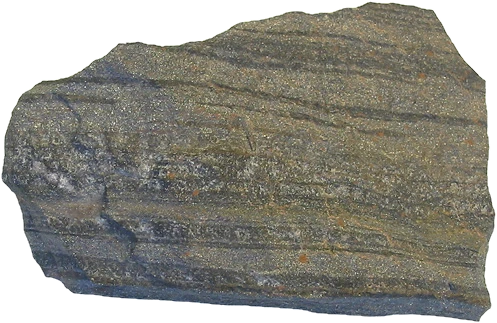
Phosphate mineral
Minerals containing phosphate anion, key to fertilizers and industry.

Phosphate minerals are minerals that contain the tetrahedrally coordinated phosphate (PO₄³⁻) anion, sometimes with arsenate (AsO₄³⁻) and vanadate (VO₄³⁻) substitutions, along with chloride (Cl⁻), fluoride (F⁻), and hydroxide (OH⁻) anions that also fit into the crystal structure. The phosphate class of minerals is a large and diverse group, though only a few species are relatively common.
- class
- Phosphates
- common_anions
- PO₄³⁻, AsO₄³⁻, VO₄³⁻, Cl⁻, F⁻, OH⁻
- primary_economic_source
- Phosphate rock (apatite-group minerals)
- major_use
- Fertilizers and animal feed supplements
- other_applications
- Water treatment, metallurgy, food preservation, ceramics, cosmetics, corrosion inhibition
Lore & Background
Phosphate minerals are defined by the presence of the tetrahedrally coordinated phosphate anion, with possible substitutions by arsenate and vanadate, as well as chloride, fluoride, and hydroxide anions. The class is large and diverse, but only a few species are relatively common. Examples include triphylite, monazite, pyromorphite, turquoise, and the apatite group, which includes hydroxyapatite, fluorapatite, and chlorapatite.
Reader's Guide
Phosphate minerals are significant primarily as the source of phosphorus, extracted from phosphate rock containing high concentrations of apatite-group minerals. The majority of mined phosphate minerals are used in agriculture for fertilizers and animal feed supplements. Beyond agriculture, they are employed in industrial applications such as water treatment, metallurgy, food preservation, ceramics, and cosmetics. Additionally, phosphate compounds are commonly used in electrochemical conversion coatings to control rust and inhibit corrosion on ferrous materials. The classification of phosphate minerals follows the Nickel–Strunz system, with a hierarchical scheme proposed by IMA-CNMNC. The class includes numerous species organized by cation size, presence of additional anions, and water content, reflecting the structural and chemical diversity of this mineral group.
Did You Know?
- Phosphate minerals contain the tetrahedrally coordinated phosphate (PO₃⁻⁴) anion, sometimes with arsenate and vanadate substitutions.
- The apatite group includes hydroxyapatite, fluorapatite, and chlorapatite.
- Phosphate compounds are utilized in electrochemical conversion coatings to control rust on ferrous materials.
- The phosphate class is large and diverse, but only a few species are relatively common.
The Three-Part Architecture of Ore Formation
Every theory of how mineral deposits assemble within the crust ultimately rests on a tripartite logic: a source must supply the material, a transport mechanism must carry it, and a trap must concentrate it into something economically extractable. This framework, originally articulated by petroleum geologists and later generalized across mineralogy, demands that the metal-bearing component be liberated from its host by some chemical or physical process before it can migrate. Transport is not merely physical displacement; it encompasses the chemical and physical phenomena that encourage movement of fluids or solid minerals toward their eventual resting place. The trap step then acts as the final filter, concentrating dispersed material through physical, chemical, geological, or biological mechanisms until a mineable grade is achieved. The scale of a deposit is governed by the interplay of all three: the largest accumulations arise when the source reservoir is vast, the conduit system operates efficiently, and the trapping structure is positioned and active at precisely the right moment in geological time.
Hydrothermal Dissolution and the Liberation of Phosphate-Bearing Phases
Hydrothermal processes represent the physicochemical reactions triggered when water circulates through the crust, often driven by magmatic intrusion or tectonic disruption. Among the many mineral groups that can be freed by these circulating fluids are phosphates such as monazite and thorianite, which dissolve when the nascent hydrothermal solution is chemically compatible with their host mineral lattice. This solubility pathway is one of several mechanisms by which trace elements locked inside rock-forming minerals are released: incompatibility between the metal and its host crystal, elevated temperatures driving decomposition reactions, and direct dissolution of the host phase all contribute. Once liberated, the metals typically require a soluble carrier species—often a salt or hydroxide complex, or a chelation-like arrangement—to remain in solution long enough for transport. The sources feeding these hydrothermal systems are diverse, ranging from circulating seawater and meteoric water through fractured rock to formational brines trapped in sediments and metamorphic fluids expelled during dehydration of hydrous minerals.
Magmatic Crystallization and Metamorphic Secretion as Concentration Engines
Within the magmatic domain, two distinct pathways can concentrate ore minerals. Fractional crystallization exploits differences in crystallization temperature: as early-forming crystals nucleate from cooling magma, they selectively incorporate certain metallic elements and may settle to the base of the intrusion, building up layers of ore-bearing material. Liquid immiscibility offers a second route, in which a portion of the magma separates into an immiscible sulfide liquid that either sinks beneath the silicate-rich body or is injected into surrounding country rock, producing deposits in mafic and ultramafic settings. In the metamorphic realm, lateral secretion operates differently: shearing and deformation during metamorphism liberate constituents such as quartz, sulfides, gold, carbonates, and oxides from the deforming rock and channel them into zones of reduced pressure or dilation, often along faults. Notably, this mechanism can function with minimal hydrothermal fluid flow, as seen in podiform chromite bodies, while simultaneously generating the physical conditions that later feed hydrothermal fluid sources.
Surficial and Sedimentary Pathways to Phosphate Concentration
Beyond endogenous processes, a suite of exogenous mechanisms concentrates ore material within the regolith through the ongoing action of the surface environment. Erosion strips away non-ore matrix, leaving behind denser or more resistant mineral grains. Sedimentary transport processes—winnowing by water or wind, density-based separation analogous to gold placer formation—can segregate heavy or chemically distinct particles. Chemical weathering, whether oxidative or acid-driven, either liberates rock fragments or generates secondary phases such as clays, laterites, and supergene enrichment zones. Low-energy depositional settings, including beach environments, allow fine-grained material to settle and accumulate. At the marine interface, Sedimentary Exhalative Deposits (SEDEX) form when metal-bearing brines discharge onto the sea floor, precipitating mineral assemblages directly from solution. Together, these surficial and sedimentary routes represent the final chapter in the source-transport-trap sequence, where environmental energy and chemistry complete the concentration of otherwise dispersed mineral material into exploitable accumulations.
Frequently Asked Questions
Who is Phosphate mineral?
Phosphate mineral is a broad mineral class defined by the presence of the tetrahedrally coordinated PO₄³⁻ anion locked into its crystal lattice. It is not a single species but an entire family of minerals that share this structural backbone.
What are Phosphate mineral's powers and role in the mineral world?
It spans a large and chemically diverse group of species, though only a small handful are actually common in the Earth's crust. Its defining strength is the phosphate tetrahedron, which can also accept arsenate or vanadate substitutions without losing structural integrity.
Why is Phosphate mineral so important to the real world?
It is the primary economic source of phosphate rock, dominated by apatite-group minerals, which feed the global fertilizer and animal-supplement industries. Without this mineral class, large-scale agriculture would face a severe phosphorus shortfall.
Who are Phosphate mineral's allies in the crystal structure?
Beyond its core phosphate anion, the structure routinely hosts chloride, fluoride, and hydroxide ions in the same lattice sites. These accompanying anions add chemical flexibility and help stabilize the overall crystal framework.
What other roles does Phosphate mineral play beyond fertilizers?
It finds applications in water treatment, metallurgical processes, food preservation, ceramic manufacturing, cosmetic formulations, and corrosion inhibition. This wide utility makes it one of the most industrially versatile mineral classes.
More in Minerals & Ore Deposits 1-24
Elsewhere in the Minerals & Ore Deposits universe
Spotted an error? Know more?
This is a living reference — every entry is fact-audited, and reader corrections feed straight into our audit queue. Suggest an edit · See this site's audit record