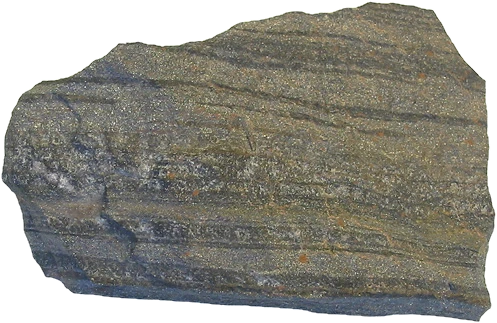
Petalite

Petalite, also known as castorite, is a lithium aluminum phyllosilicate mineral with the formula LiAlSi4O10, crystallizing in the monoclinic system. It occurs as colorless, pink, grey, yellow, yellow grey, to white tabular crystals and columnar masses, and is found in lithium-bearing pegmatites alongside spodumene, lepidolite, and tourmaline.
- discoverer
- José Bonifácio de Andrada e Silva
- type_locality
- Utö Island, Haninge, Stockholm, Sweden
- crystal_system
- monoclinic
- chemical_formula
- LiAlSi4O10
Lore & Background
Its name derives from the Greek word petalon, meaning 'leaf,' alluding to its perfect cleavage. The type locality is Utö Island, Haninge, Stockholm, Sweden. The mineral occurs in lithium-bearing pegmatites with spodumene, lepidolite, and tourmaline.
Reader's Guide
The element was named 'lithium' from the Greek word for 'stone' due to its discovery in this mineral. Petalite and secondary spodumene formed from it are lower in iron than primary spodumene, making it a more useful source of lithium in applications such as glass production. Colorless varieties are often used as gemstones. The first important economic application for petalite was as a raw material for the glass-ceramic cooking ware CorningWare, and it has also been used in ceramic glazes. Economic deposits are found near Kalgoorlie, Western Australia; Aracuai, Minas Gerais, Brazil; Karibib, Namibia; Manitoba, Canada; and Bikita, Zimbabwe.
Did You Know?
- Petalite is also known as castorite.
- The name petalite comes from the Greek word petalon, meaning 'leaf,' referring to its perfect cleavage.
Petalite's Host Rock: The Pegmatite Connection
Petalite is found within pegmatites, a distinctive class of igneous rock that belongs to the broader family of magmatic deposits—those originating directly from magma. What sets pegmatites apart is their extraordinarily coarse grain structure, a direct consequence of how they form. Deep beneath the Earth's surface, these rocks crystallize over extended periods, and this slow cooling process allows individual crystals to grow to remarkable sizes. The majority of pegmatites share a granitic composition, placing them within a well-understood geological framework. It is within these massive, slowly formed crystals that petalite develops alongside other industrial minerals. As a magmatic deposit, pegmatite represents one of several pathways through which valuable minerals become concentrated in rock to levels that can be economically meaningful. The geological processes behind ore genesis—encompassing the movement, cooling, and crystallization of molten material at depth—ultimately create the conditions under which petalite and its mineral neighbors become accessible to human extraction.
Petalite Among the Industrial Minerals
Petalite does not stand alone in the mineral world. It is grouped alongside quartz, feldspar, spodumene, and rare lithophile elements as one of the industrial minerals that pegmatites provide in significant quantities. This clustering matters because it tells us that petalite shares a geological origin with a diverse set of materials, all born from the same slow-crystallizing, granitic, deep-seated igneous process. In the broader language of ore and mineral economics, the minerals of interest in any given rock are typically oxides, sulfides, silicates, or native metals. A rock qualifies as ore only when its mineral concentrations exceed background levels and the value of what it holds justifies the cost of pulling it from the ground. When a single rock body contains more than one valuable mineral—as pegmatites clearly do with their assemblage of quartz, feldspar, spodumene, petalite, and rare elements—it is termed a complex ore, a designation that reflects both geological richness and the added complexity of separating each component for its intended use.
Separating the Valuable from the Wasteful
No ore body, including the pegmatites that host petalite, is composed solely of the mineral one seeks. In practice, the desired material is intermixed with other valuable minerals and with valueless rock and mineral matter collectively called gangue. This inseparability is a fundamental constraint: the gangue cannot be avoided during mining, and it must be dealt with through a series of operations known as mineral processing or ore dressing. The first critical step is liberation, which frees the target mineral from the surrounding gangue matrix. The second is concentration, which separates the desired mineral from the rest. Techniques employed include froth flotation, gravity concentration, and electric or magnetic methods, among others. Once processing is complete, the discarded gangue becomes tailings—materials that are economically useless yet potentially harmful, produced in especially large volumes when the source deposit is of lower grade. Some ores and their byproducts also pose threats to human health and surrounding ecosystems, a consideration that must factor into any extraction decision.
Naming, Classification, and the Economics of Viability
Every ore deposit, whether it hosts petalite or any other mineral, must pass a threshold of economic significance to be distinguished from a mere mineral resource. A mineral resource is simply a deposit of minerals; an ore deposit is one where the concentration is high enough that extraction and processing become financially justifiable. Ore deposits are classified according to criteria developed through the study of economic geology and ore genesis, with pegmatites falling squarely within the magmatic category. Beyond their geological classification, deposits carry names that reveal human history and culture: some are named for their geographic location, others after the discoverer, and still others after a whimsical reference, a historical figure, a city, a mythological entity, or even the internal code name assigned by the resource company that found them. The word ore itself traces back to Anglo-Saxon, where it simply meant a lump of metal, a reminder that the concept of ore is as old as humanity's first encounters with concentrated metallic material in the earth.
Frequently Asked Questions
Who is Petalite?
Petalite is a phyllosilicate mineral built from lithium, aluminum, and silicon (LiAlSi4O10), and it is also catalogued under the name castorite. It belongs to the monoclinic crystal family and typically presents as flat, plate-like or columnar growths in hues ranging from clear and white to pink, grey, and yellow.
What is Petalite's role in the geological cast?
Petalite plays a supporting role in lithium-rich pegmatite deposits, sharing the same rock body as spodumene, lepidolite, and tourmaline. Its presence helps geologists flag pegmatites that may be economically significant for lithium extraction.
Who discovered Petalite and where was it first found?
The mineral was identified by the Brazilian naturalist José Bonifácio de Andrada e Silva. Its type locality is Utö Island in the Haninge municipality just outside Stockholm, Sweden.
What does Petalite look like in its natural form?
It grows as tabular (plate-shaped) crystals or columnar aggregates, and its color palette spans colorless, white, pink, grey, yellow, and yellow-grey. The distinctly flat, table-like crystal habit is one of its most immediately recognizable visual traits.
Why is Petalite important to the mineral-collecting community?
As a lithium-bearing phase in pegmatites, it sits alongside other economically critical lithium minerals, making it a key specimen for anyone studying battery-metal geology. Its monoclinic crystal form and often striking tabular habit also make it a popular choice for collectors.
More in Minerals & Ore Deposits 1-24
Elsewhere in the Minerals & Ore Deposits universe
Spotted an error? Know more?
This is a living reference — every entry is fact-audited, and reader corrections feed straight into our audit queue. Suggest an edit · See this site's audit record