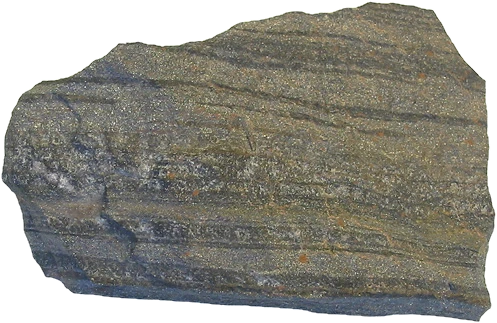
Sphalerite
Primary zinc ore, named for its deceptive appearance.

Sphalerite is a sulfide mineral with the chemical formula (Zn, Fe)S and is the most important ore of zinc. It is found worldwide in a variety of deposit types, including sedimentary exhalative, Mississippi-Valley type, and volcanogenic massive sulfide deposits.
- discovered_by
- Ernst Friedrich Glocker
- chemical_formula
- (Zn, Fe)S
- crystal_system
- face-centered cubic (zincblende structure)
- hardness
- 3.5 to 4 on Mohs scale
- primary_use
- ore of zinc, also cadmium, gallium, germanium, indium
Lore & Background
Sphalerite crystallizes in the face-centered cubic zincblende crystal structure, which was named after the mineral. This structure is closely related to the structure of diamond. Sphalerite has been found as a pseudomorph, taking the crystal structure of galena, tetrahedrite, barite, and calcite. The iron content generally increases with formation temperature and can reach up to 40%, with composition ZnxFe(1-x)S where x ranges from 1 to 0.6. Common cation impurities include cadmium, mercury, manganese, gallium, germanium, and indium; sulfur can be substituted by selenium and tellurium.
Reader's Guide
Sphalerite is the most important ore of zinc, accounting for about 95% of primary zinc extraction. It is also a significant source of cadmium, gallium, germanium, and indium. The mineral is found in a wide range of deposit types, including sedimentary exhalative (SEDEX) deposits, which provide about 50% of zinc and lead; Mississippi-Valley type (MVT) deposits, accounting for 15–20%; and volcanogenic massive sulfide (VMS) deposits, which account for 25% of zinc reserves. Sphalerite's physical properties include perfect dodecahedral cleavage, a hardness of 3.5 to 4, and a distinctive resinous luster. It is a semiconductor in pure form but becomes conductive with increasing iron content. The mineral exhibits triboluminescence, typically yellow-orange, and can fluoresce under ultraviolet light depending on impurities. Varieties include cleiophane (nearly pure ZnS, fluorescent orange/blue) and marmatite (opaque black with high iron). Sphalerite is not recognized by the IMA in its varieties cleiophane and marmatite.
Did You Know?
- Sphalerite was named from the Greek word sphălerós, meaning 'deceiving', due to the difficulty of identifying the mineral.
- The zincblende crystal structure, named after sphalerite, is closely related to the structure of diamond.
- Sphalerite can be triboluminescent, producing a yellow-orange light when struck.
- Marmatite is an opaque black variety of sphalerite with high iron content, named after the Marmato mining district in Colombia.
More in Minerals & Ore Deposits 1-24
Elsewhere in the Minerals & Ore Deposits universe
Spotted an error? Know more?
This is a living reference — every entry is fact-audited, and reader corrections feed straight into our audit queue. Suggest an edit · See this site's audit record