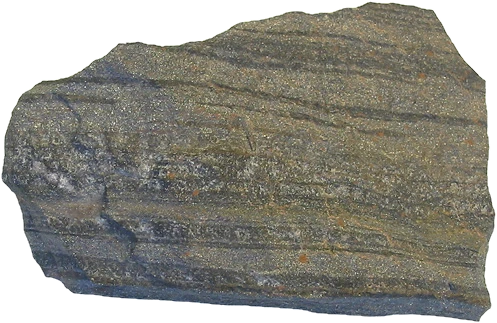
Sperrylite
Sperrylite is the most common platinum mineral, named after chemist Francis L. Sperry.

It is the most common platinum mineral and occurs primarily in nickel ore deposits, notably in the Sudbury Basin, the Bushveld region of South Africa, and the Oktyabr'skoye deposit near Noril'sk, Russia.
- chemical_formula
- PtAs2
- crystal_system
- Isometric (cubic)
- hardness
- 6–7
- specific_gravity
- 10.6 (measured), 10.78 (calculated)
- color
- Tin-white
- luster
- Metallic
Lore & Background
Sperrylite was first described by H. H. It was named for Francis L. The mineral occurred in weathered material with colorless transparent cassiterite, thought to have been derived from the oxidation of stannite. Sperrylite crystallizes in the isometric system with the pyrite group structure, forming cubic, octahedral, or pyritohedral crystals as well as massive and reniform habits. It has a Mohs hardness of 6–7 and a very high specific gravity. The most important occurrence of sperrylite is in the nickel ore deposit of the Sudbury Basin in Ontario, Canada. It also occurs in the layered igneous complex of the Bushveld region of South Africa and the Oktyabr'skoye copper-nickel deposit near Noril'sk, Russia. It has been reported in alluvial deposits in North Carolina and identified in Finland from sulfide deposits associated with layered mafic-ultramafic complexes.
Reader's Guide
Sperrylite is significant as the most common platinum mineral and a primary source of platinum in major ore deposits. Its discovery in the Sudbury Basin contributed to the understanding of platinum-group element mineralization in nickel-copper sulfide systems. The mineral's resistance to weathering allows it to persist in alluvial deposits, aiding exploration. Sperrylite's crystal structure, shared with the pyrite group, and its association with other rare platinum-group minerals make it a key subject in economic geology and mineralogy. Its occurrence in the Bushveld Complex and Noril'sk region underscores its global economic importance. The mineral's naming after Francis L. Sperry honors his role in its discovery during fire assays for gold. Sperrylite's high density and metallic luster facilitate identification, and its presence in diverse geological settings—from Canadian nickel ores to North Carolina gem gravels—highlights its widespread distribution. Studies of sperrylite's crystal forms, including seventeen identified varieties, provide insights into crystallization conditions in magmatic sulfide systems.
Did You Know?
- Sperrylite has a very high specific gravity of 10.6 (measured) and a calculated specific gravity of 10.78.
- It is the most common platinum mineral and occurs with minerals such as cooperite, laurite, and kotulskite.
More in Minerals & Ore Deposits 1-24
Elsewhere in the Minerals & Ore Deposits universe
Spotted an error? Know more?
This is a living reference — every entry is fact-audited, and reader corrections feed straight into our audit queue. Suggest an edit · See this site's audit record