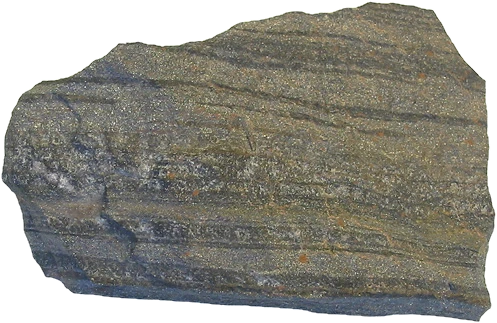
Silicate mineral
Silicate minerals form 90% of Earth's crust.

Silicate minerals are rock-forming minerals composed of silicate groups. They are the largest and most important class of minerals, making up approximately 90 percent of Earth's crust. On Earth, a wide variety of silicate minerals occur in an even wider range of combinations as a result of processes that have been forming and re-working the crust for billions of years, including partial melting, crystallization, fractionation, metamorphism, weathering, and diagenesis.
- classification
- Largest and most important class of minerals
- crust_abundance
- Approximately 90 percent of Earth's crust
- primary_component
- Silicate groups with formula [SiO2+n]2n−
- common_cations
- Mg2+, Fe2+, Na+
- major_groups
- Tectosilicates, Nesosilicates, Sorosilicates, Cyclosilicates, Inosilicates, Phyllosilicates
Lore & Background
Silicate minerals are generally inorganic compounds consisting of subunits with the formula [SiO2+n]2n−. Balancing the charges of the silicate anions are metal cations such as Mg2+, Fe2+, and Na+. The Si-O-M linkage between the silicates and the metals are strong, polar-covalent bonds. Silicate anions are invariably colorless or white when crushed; the colors of silicate minerals arise from the metal component, commonly iron. In most silicate minerals, silicon is tetrahedral, surrounded by four oxides. Some silicon centers may be replaced by atoms of other elements, such as aluminum, which can contribute extra charge to the anion and require extra cations.
Reader's Guide
Silicate minerals are classified into seven major groups according to the structure of their silicate anion: tectosilicates, nesosilicates, sorosilicates, cyclosilicates, inosilicates, phyllosilicates, and others. Tectosilicates can only have additional cations if some silicon is replaced by an atom of lower valence such as aluminum. Nesosilicates have isolated [SiO4]4− tetrahedra connected only by interstitial cations. Sorosilicates have isolated pyrosilicate anions Si2O6−7. Cyclosilicates have three or more tetrahedra linked in a ring. Inosilicates have interlocking chains of silicate tetrahedra. Phyllosilicates form parallel sheets of silicate tetrahedra and are hydrated. Living organisms also contribute to the geologic cycle; for example, diatoms construct their exoskeletons from silica extracted from seawater, and their frustules are a major constituent of deep ocean sediment and diatomaceous earth.
Did You Know?
- Silicate minerals make up approximately 90 percent of Earth's crust.
- The Nickel–Strunz classification categorizes silica as oxide minerals (4.DA), while the Dana classification treats it as a tectosilicate (75.1).
- Diatoms construct their exoskeletons from silica extracted from seawater.
- In most silicate minerals, silicon is tetrahedral, being surrounded by four oxides.
More in Minerals & Ore Deposits 1-24
Elsewhere in the Minerals & Ore Deposits universe
Spotted an error? Know more?
This is a living reference — every entry is fact-audited, and reader corrections feed straight into our audit queue. Suggest an edit · See this site's audit record