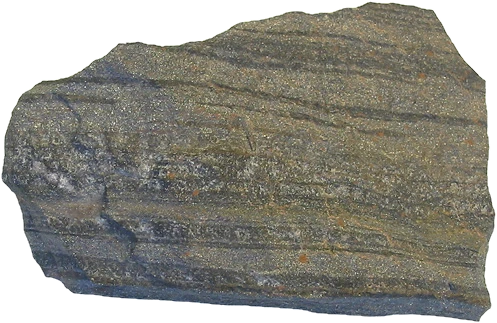
Sylvite
Potassium chloride mineral used as fertilizer and historically in infrared optics.
Sylvite, also known as sylvine, is the natural mineral form of potassium chloride (KCl). It is an evaporite mineral that crystallizes in the isometric system, closely resembling halite (rock salt), and is one of the last minerals to precipitate from evaporating saline solutions. Its principal use is as a potassium fertilizer, and it is found in massive bedded deposits worldwide, with the largest source in Saskatchewan, Canada. (Note: The official mineral of Saskatchewan is potash, a rock composed mainly of sylvite and other potassium salts.)
- known_for
- Potassium chloride mineral used as fertilizer and historically for infrared optics
Lore & Background
Sylvite appears as crystals in the isometric system, closely resembling halite in form, and is colorless to white, often displaying yellow or red shades caused by inclusions. It has a Mohs hardness of 2.5, a specific gravity of 1.99, and a refractive index of 1.4903. The mineral possesses a salty taste with a notable bitterness. As one of the last evaporite minerals to crystallize from solution, it occurs only in very dry saline environments. Sylvite is found in numerous evaporite deposits globally, with massive bedded deposits in New Mexico, western Texas, and Utah in the United States, while the largest world source lies in Saskatchewan, Canada, where the deposits formed from the evaporation of a Devonian seaway. It is the official mineral of Saskatchewan. First described in 1832 at Mount Vesuvius near Naples, Italy, it was named after historical designations for potassium chloride, which themselves honored the Dutch physician and chemist François Sylvius de le Boe. Beyond its principal use as a potassium fertilizer, sylvite is employed alongside quartz, fluorite, and halite for spectroscopic prisms and lenses.
Reader's Guide
Sylvite is significant primarily as a source of potassium for fertilizer, being one of the last evaporite minerals to precipitate from solution, thus found only in very dry saline areas. Its massive bedded deposits occur in New Mexico, western Texas, and Utah in the US, but the largest world source is in Saskatchewan, Canada, where the deposits formed from the evaporation of a Devonian seaway. Beyond agriculture, sylvite is used along with quartz, fluorite, and halite for spectroscopic prisms and lenses. The mineral's naming honors François Sylvius de le Boe, reflecting its historical chemical associations.
Did You Know?
- Potash, a rock composed mainly of sylvite and other potassium salts, is the official mineral of Saskatchewan, Canada.
- It has a salty taste with a distinct bitterness.
- Sylvite is one of the last evaporite minerals to precipitate out of solution.
- Sylvite was historically used for infrared spectroscopic prisms and lenses, but its high hygroscopicity limits modern use.
Frequently Asked Questions
Who is Sylvite in the Minerals & Ore Deposits series?
Sylvite (also called sylvine) is the naturally occurring mineral form of potassium chloride, an evaporite that crystallizes in the isometric system and closely resembles halite, or rock salt.
What is Sylvite's main role or 'power'?
Its primary function is supplying potassium for agricultural fertilizer, which is its dominant modern use. It has also seen historical application in infrared optical components.
Where does Sylvite appear, and where is its biggest 'home base'?
Sylvite occurs in massive bedded evaporite deposits worldwide, but its most prominent source is in Saskatchewan, Canada, where potash rock—composed largely of sylvite and other potassium salts—serves as the province's official mineral.
How does Sylvite's origin story unfold geologically?
Sylvite crystallizes as one of the final minerals to precipitate from evaporating saline solutions, placing it late in the classic evaporite deposition sequence.
Why is Sylvite considered important to the broader mineral world?
It is the principal natural source of potassium chloride used in fertilizers, making it vital to global food production. Its historical role in infrared optics adds a secondary layer of significance.
More in Minerals & Ore Deposits 1-24
Spotted an error? Know more?
This is a living reference — every entry is fact-audited, and reader corrections feed straight into our audit queue. Suggest an edit · See this site's audit record